
API-first DCIM: Reduce Integration Friction and Keep Control Across Tools

Share:

Disconnected tools slow your operations down more than missing data ever could. Every day, teams waste hours stitching together systems that don’t naturally talk to each other. API-first DCIM cuts through that drag, turning scattered signals into one clear operational view. With Hyperview DCIM, you connect faster, keep control, and make decisions without extra manual work.
Overcoming Tool Disconnects
Disconnected systems create a significant barrier to maintaining operational efficiency and control. You might find yourself constantly juggling between different tools, struggling to pull together a coherent overview of your data center.
Challenges of Scattered Systems
Think about the times you’ve had to reconcile data from multiple platforms. It can feel like piecing together a puzzle without seeing the whole picture. Every tool speaks its own language, and translating these can waste precious hours. This scattering increases the risk of errors, as manual data handling becomes more prone to mistakes. For many teams, these challenges slow down decision-making and lead to frustration.
Consider a typical day where your team spends hours logging into different systems, exporting data, and trying to make sense of it all. The manual effort is not just a time drain; it’s a risk to data accuracy and operational insight. This disjointed approach limits your ability to act quickly and effectively when issues arise.
Impact on Operational Control
When systems don’t communicate, maintaining control becomes a struggle. You need a clear, unified view of your infrastructure to make informed decisions. Without it, you’re reacting to problems rather than preventing them. The lack of integration hampers your ability to streamline processes and optimize resources. This inefficiency can affect everything from energy use to equipment lifespan, directly impacting your bottom line.
Now, imagine having all your data in one place, ready to inform and guide your actions. Rather than reacting to scattered signals, you could anticipate and address issues proactively. With integrated systems, you gain control over your operations, enhancing visibility and reducing risks.
API-First DCIM Advantages
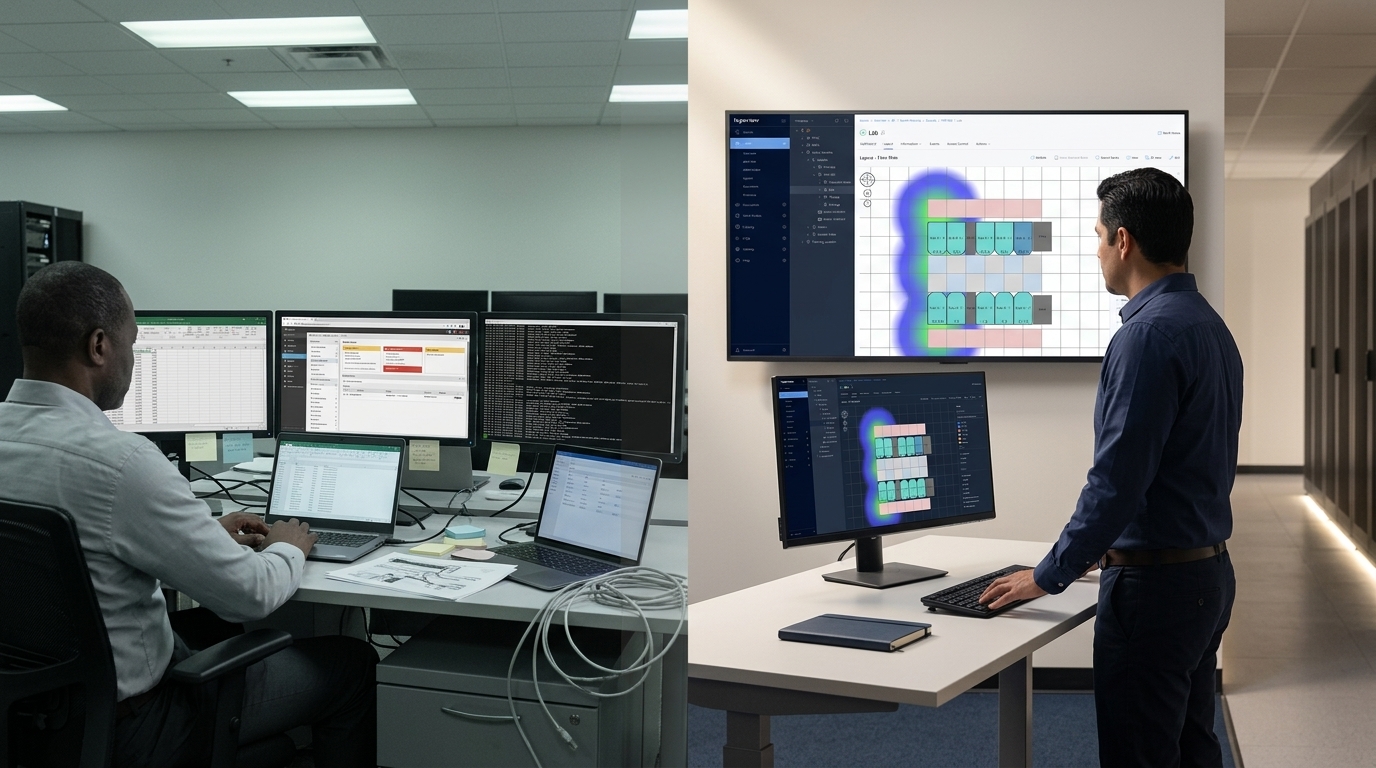
API-first DCIM solutions change the game by creating seamless connections between your tools. This approach drastically reduces the friction of integrating new systems, allowing you to maintain a holistic view of your operations.
Streamlining Workflows with APIs
APIs act as bridges, connecting disparate systems and allowing them to share data effortlessly. With an API-first approach, you can automate workflows that previously required manual intervention. This integration means you spend less time managing data and more time using it to drive decisions.
Think of APIs as the unseen connectors making your tools work together smoothly. By automating data exchanges, they eliminate the need for manual data entry and reconciliation. This not only saves time but also improves data accuracy. With integrated workflows, you can focus on strategic tasks rather than getting bogged down by routine data management.
Real-Time Monitoring and Visibility
Having real-time access to data is crucial for maintaining operational efficiency. API-first DCIM enables continuous monitoring of your infrastructure, providing immediate insights into performance and potential issues. This transparency allows for quick responses to anomalies, minimizing downtime and enhancing reliability.
Imagine being alerted to a potential issue before it becomes a problem. Real-time visibility enables proactive management, ensuring that your systems run smoothly and efficiently. With constantly updated data at your fingertips, you can make informed decisions quickly, maintaining the health and efficiency of your operations.
Hyperview’s Approach to Integration

Hyperview’s API-first strategy simplifies the integration process, ensuring that your systems work together seamlessly. By removing the barriers that prevent tools from communicating, Hyperview provides a clearer view of your operations.
Connecting Systems with Ease
Connecting your tools shouldn’t feel like a struggle. Hyperview focuses on making integrations straightforward and accessible. By adopting an API-first approach, Hyperview ensures that connecting new systems is as painless as possible. This ease of integration allows you to maintain a cohesive operational view without the typical headaches.
With Hyperview, you can integrate systems quickly, reducing the time and effort usually required. This flexibility not only streamlines current operations but also allows for easy scaling as your needs evolve. Simplified integration means you can adapt to changes swiftly, maintaining control and efficiency.
Achieving Operational Clarity and Confidence
An integrated system provides clarity and confidence in your operations. Hyperview’s approach ensures that all your data is unified, offering a single pane of glass for monitoring and management. This consolidation transforms scattered data into actionable insights, empowering you to optimize your operations.
With a complete view of your infrastructure, you can anticipate challenges and respond proactively. This operational clarity allows for better resource management, reduced risks, and improved efficiency. With Hyperview, you gain the confidence that your systems are aligned and your data is reliable.
Frequently Asked Questions
What is API-first DCIM?
API-first DCIM is a strategy that prioritizes the integration of systems using APIs. It allows different tools to communicate and share data seamlessly, enhancing operational visibility and efficiency.
How do APIs improve data center management?
APIs create connections between disparate systems, automating data exchanges and reducing the need for manual intervention. This improves data accuracy and allows for more efficient workflow management.
Why is real-time monitoring important?
Real-time monitoring provides continuous insights into your infrastructure, enabling quick responses to potential issues. This transparency helps maintain operational efficiency and reduces downtime.
How does Hyperview simplify system integration?
Hyperview uses an API-first approach to make integrating new systems straightforward. This reduces the time and effort required for integration, allowing for a cohesive operational view.
What benefits come from a unified operational view?
A unified view consolidates data across systems, transforming scattered information into actionable insights. This clarity improves decision-making, resource management, and overall efficiency.

Get started!
No credit card needed. Access all the features.